What if looking like you’re coping doesn’t mean you are?
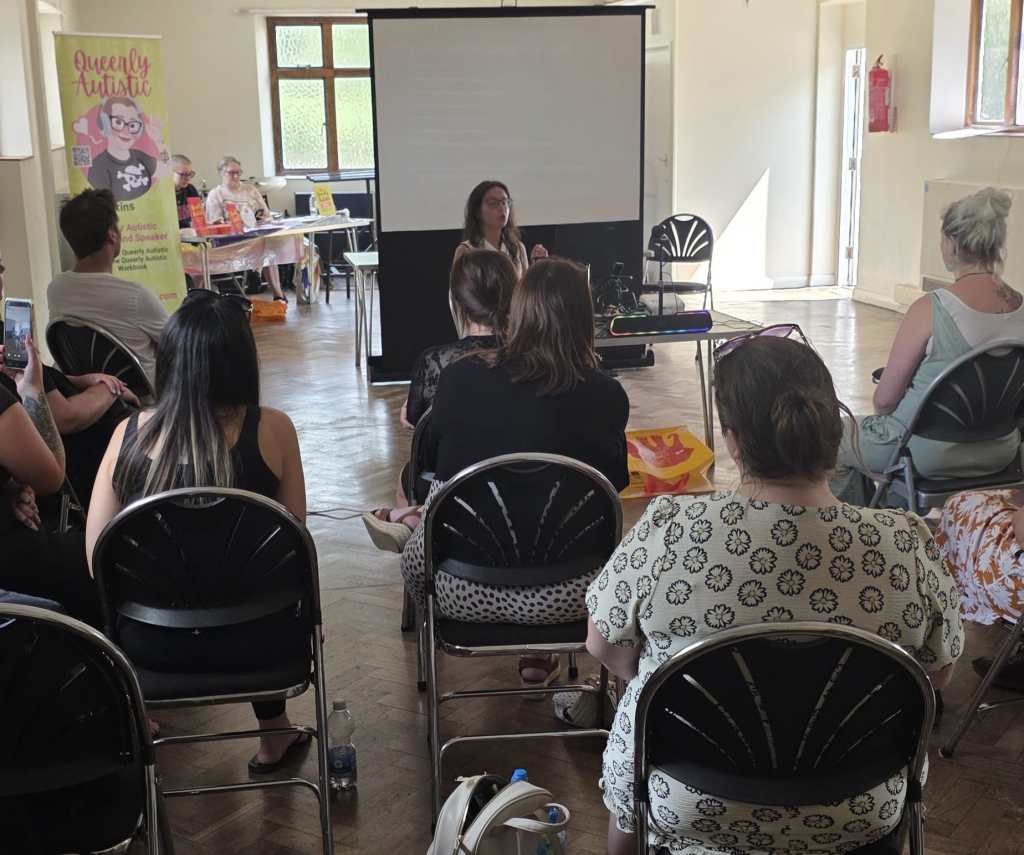
On Saturday 15th August 2026, I had the opportunity to speak at the Autistic Mental Health Conference, delivering my presentation Survival on the Surface: Masking, Misunderstanding and Mental Health in Autism.
I’ve had a lifetime of masking, so this was a subject that felt very personal to me. I’ve experienced being misunderstood and falling through the cracks in both education and social care, and I’ve seen how easily what people see on the outside can be very different from what is happening underneath.
My presentation brought together my own lived experience with research evidence, because I wanted to show that these experiences are not just personal stories, there is also a growing body of research exploring autistic masking, camouflaging and its potential impact on mental health.
Being able to stand in front of an audience and talk openly about those experiences was incredibly meaningful to me.
Standing up and speaking about something that has been such a big part of my life felt so rewarding. I was sharing experiences that haven’t always been easy to talk about, but I also felt fulfilled to be able to use my voice in a way that might help other people understand masking differently.
Why Masking Matters
My presentation explored what masking is, and why autistic people can feel they have to mask, and what can happen when hiding parts of yourself becomes a way of surviving.
I drew on both research and lived experience throughout the presentation, using the evidence to help place my own experiences within the wider picture of autistic masking.
I wanted to go beyond simply explaining what masking means. I wanted people to think about why someone might have learnt that they need to mask in the first place.
One of the questions I asked the audience was:
“If someone has learnt to hide parts of themselves because those parts weren’t accepted, should we be asking them to stop masking, or should we be asking what made masking feel necessary in the first place?”
For me, that question gets to the heart of why I wanted to speak about this subject.
The Conversation Continued
One of the highlights for me was the questions I received afterwards.
Someone asked how do you know what the right things to say and the wrong things to say when an individual is masking.
Another person asked how you can recognise masking in a child if they are unable to tell you themselves.
We talked about how sometimes a child may appear to cope throughout the school day, but then experience significant distress when they get home.
That doesn’t automatically mean they have been masking, but it can be something worth exploring.
Sometimes a person may hold everything together in an environment where they feel they have to cope, and then release that distress when they get back to somewhere they feel safe.
It made me think about how important it is to look beyond what we see and ask what might be happening underneath.
From Lived Experience to Change
For me, speaking isn’t just about sharing my own experiences.
It’s about taking those experiences and using them to encourage people to think differently about autism, mental health and the way organisations respond to autistic people.
I believe people’s voice should be heard, particularly when those voices have historically been misunderstood or overlooked.
That’s why I enjoy speaking at events like this. I get to turn some of the difficult experiences I’ve had into something that may help someone else feel understood or encourage positive change in policy and practice.
An Unexpected Opportunity
At the end of my presentation, the organiser approached me and asked whether I would be interested in being part of a livestream podcast, if we could think of a topic to explore.
I was really proud to be asked.
We haven’t decided on a topic yet, but I’m looking forward to seeing where the conversation could go.
It’s exciting to think that one presentation could lead to another opportunity to share lived experience and continue conversations around autism and mental health.
Looking Forward
This reminded me why I love speaking.
There is something incredibly powerful about being able to stand in a room, share experiences that haven’t always been understood, and then have people come up afterwards wanting to continue the conversation.
For me, this is what advocacy is about.
Not just telling people what needs to change, but starting conversations that might help create that change.
What might we understand differently if we looked beyond what we see on the surface?


Leave a Reply