A History of Misunderstanding
Autism has been wrongly viewed through the lens of mental illness. Historically, autistic people have been detained under the Mental Health Act. Yet autism is not a mental illness. It cannot be medicated or “treated away”.
Autism is a different neurotype. A unique way of feeling, thinking, and processing the world around us.
Difference Treated as a Problem
Autistic differences have constantly been treated as something that needs to be fixed. We live in a world that often punishes difference, struggles with true inclusion, and pathologises those who do not fit into society’s expectations. Evidence is clear that autism itself is not a mental illness. So where does the link between autism and mental health difficulties really come from?
What Evidence Shows
Research shows autistic people are much more likely to experience mental health challenges. According to Autistica’s information pages:
“autistic people are four times more likely to experience depression than the general population, and around 8 in 10 autistic people will experience a mental health problem such as anxiety or depression in their lifetime” (figures cited in 2024-2025).
The Reality Behind the Statistics
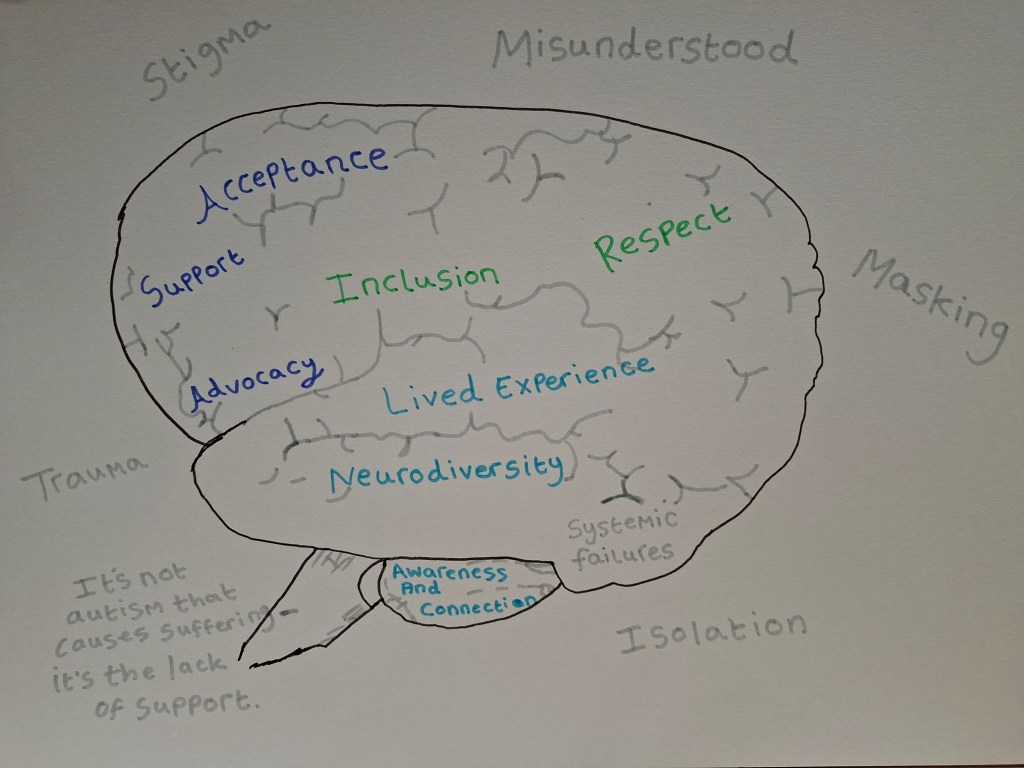
Both lived experience from the autistic community and current research point to the same answer. Mental health challenges we face are not caused by autism itself, but by a lack of acceptance, bullying, stigma, discrimination, masking, and systemic failures in support. Being denied equality, misunderstood by professionals, or even detained in hospitals simply for being different has lasting effects on wellbeing. What would it take for our needs to be recognised and respected?
A Personal Perspective
From my own personal experience as an autistic person, being constantly misunderstood, judged, and invalidated by systems that are meant to provide support has had a detrimental impact on my anxiety. It is not autism that causes hardship. It is the external pressures, the lack of understanding, and the absence of appropriate support that create stress, trauma, and mental distress.
When Difference Is Blamed
When difference is blamed instead of valued, it is no surprise that mental health struggles arise. Anyone would be affected by being treated unfairly simply for existing.
Moving Forward
It is time for society to move beyond fear and misunderstanding. The Real question is not why autistic people struggle, but what needs to change so that we don’t have to.

 Autism-Lens
Leave a comment